A vacation rental hands its front door to a new group of strangers every few days. Keys go home in beach bags, get copied for a friend arriving late, or disappear in the sand, and every missing key is a reason to rekey before the next arrival. A keyless lock takes the key out of that cycle.
With codes, each booking gets its own way in, the cleaning crew gets another, and the owner keeps a master that none of them ever sees. Nothing has to be mailed, left in a lockbox or collected from an office.
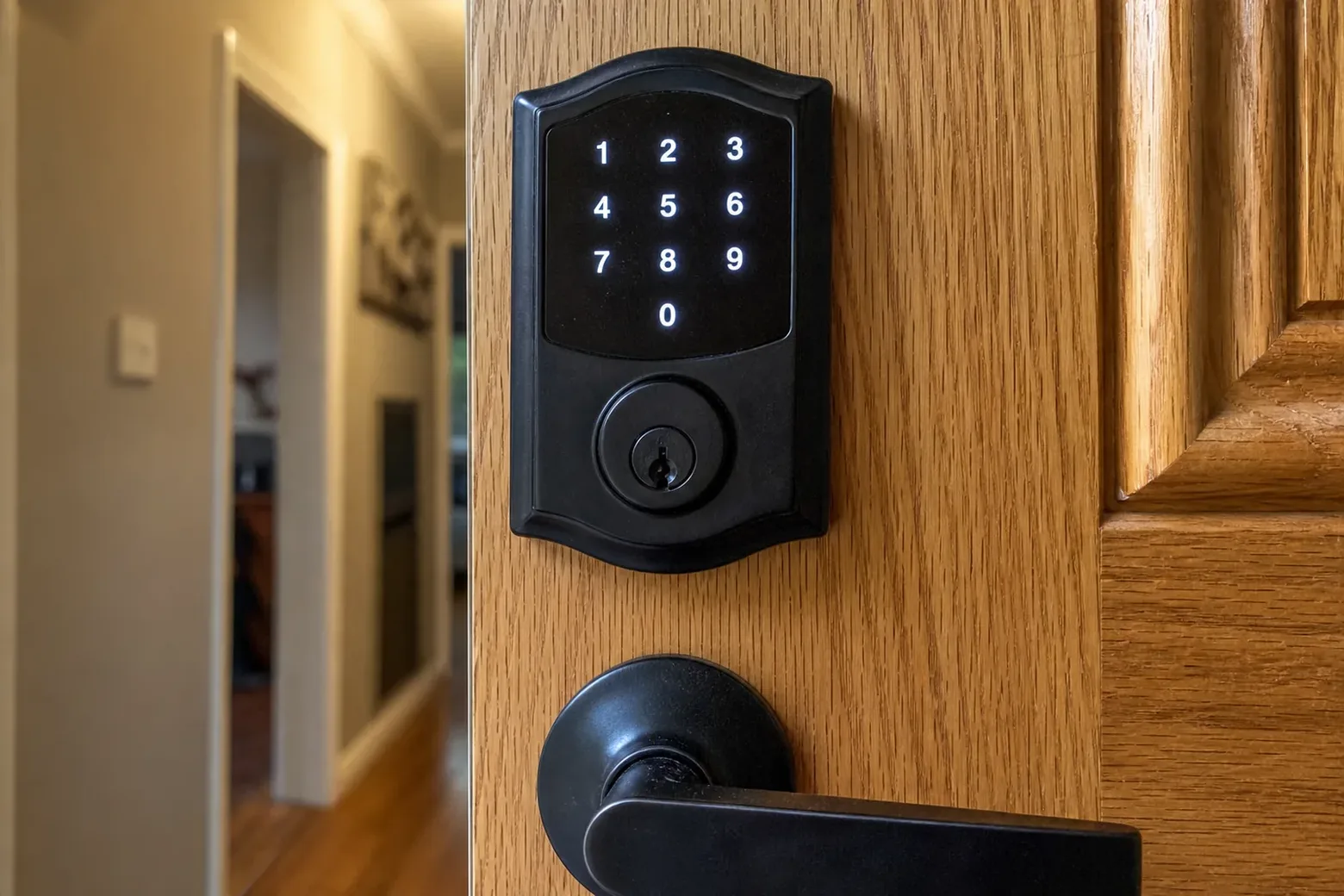
A keypad deadbolt with its codes stored in the lock suits a long-term home, or a rental managed by someone who visits in person. An app-connected lock suits an owner who lives somewhere else: codes can be issued for each stay from a phone, and the entry log shows when guests and cleaners really came and went.
Some property managers and rental platforms work with particular lock systems. If yours does, say so on the call, and the lock is matched to what the manager already uses.
Whichever you pick, the bolt has to move freely in the door before any code is set. A lock straining against a misaligned strike drains its batteries and tends to fail at the worst time, usually with guests standing on the porch.
Many keyless locks can give a code a start and an end, so a guest's code works from check-in to check-out and then stops by itself. A cleaner's code can be limited to turnover days, and a code for a repair crew can be switched on for a single afternoon.
If something goes wrong in between, say a guest who locked the keypad out with too many wrong tries, or a new code that won't take, the same number handles it, and the lock is looked at in person.
Condo buildings near the courses often have rules about unit door hardware, and some associations want a key or a code of their own for emergencies. The finish and style are matched to what the building allows, and any association code is set up the way the board asks.
Storage closets usually stay on ordinary keys, and those can go on the same key as the unit door when the locks allow it.
Lobbies, pool gates and parking garages stay with the association; the work covers the unit door and whatever you own behind it.
One visit covers most homes and units.
Front door or side entry, who manages the property, and whether guests already arrive by code.
ID tied to the address, or the owner's permission for a managed rental.
The door is prepared so the bolt runs smoothly, and nothing is drilled until you say yes.
Master code to the owner, cleaner and guest codes as you choose, the app paired, and the lock run until it locks every time.
A keypad on a door that takes the full afternoon sun gets hot, and a lock a few streets from the ocean breathes salt every day. Finishes and models made for coastal homes hold up better, and the keypad's seal is seated so blowing sand and rain stay out of the electronics.
Keypads that fade or ignore a button after a few summers usually have trouble at the contacts. Sometimes that can be cleaned up and resealed; sometimes the lock has done its time. Either way, you know before anything new is ordered.
Keyless locks warn before their batteries quit, with a light, a beep or a message to the owner's phone, and a rental is where that warning matters most. Battery changes can become part of each turnover, and a key cylinder on the lock, with the key held by the manager or a neighbor, covers the rest.
If guests do end up outside, it is handled like any lockout: one call, the door opened, and the lock gone over so the next arrival doesn't meet the same problem.
Not every keyless lock on the Grand Strand guards a rental. Families in the newer neighborhoods inland use them for simpler reasons: kids who lose keys, grandparents who help with school pickups, a dog walker on weekdays. Each of them gets a code, and the door from the garage often gets a keypad of its own, since it is the door the family really uses.
Where a builder already put a keypad on the front door, it is cleared of old codes and set up fresh, so the house opens only for the people living in it now.
Yes. Most app-connected locks issue a code per booking that starts at check-in and stops at check-out, and keypad models hold several codes that get swapped out after each visit.
Only to manage codes from a distance and see the entry log. Without it, codes are set at the keypad, which works well for a home someone visits in person. A plug-in bridge near the door can add remote access later if the place gets internet.
The owner or manager can resend it or issue a new one from the app. With a keypad-only lock, whoever holds the master code can add one on site. If nobody can reach the guest or the app, call, and the door is opened for the person staying there once the booking is confirmed.
Usually. Tell us what the board allows, and the finish and style are chosen to fit.
Most go into the holes a standard deadbolt already uses. Unusually thick doors, or doors carrying older hardware, may need a different model, and you hear which before any drilling.
Yes. Many keyless deadbolts keep a key cylinder, and that key can be matched to the other doors so one key covers the house.
Usually. Share the brand and model on the call so the technician can confirm it suits the door before cutting anything.
With an app-connected lock, yes. The log shows when each code was used, which settles questions about late arrivals and early check-outs.
Yes, free and up front. You see the options for the door and the way the place is used before anything is ordered.
Call us and we get a tech out to you.